


- HOME
- ABOUT
-
PRODUCTS
- FAQs
- INSTRUCTIONAL VIDEOS
- CONTACT

The Covid-19 pandemic has affected so many of us in different ways, changing many people's lives forever. As climbers we were all forced to give up our favourite pastime during the three lockdowns the UK has had so far. With indoor walls closed and travel to the outdoor rock banned, we all had to be creative and it forced some of us to examine what else we have in our lives other than climbing that can fulfil us. Huge thanks to Seb for this guest blog that gives an insight of life as a climber in lockdown. We love how he got creative and also learnt about what else he could do to broaden his horizons when he was forced to stop climbing...
"Hey everyone, I’m Seb, an 18-year-old climber from Dorset. I love climbing, whether it's bouldering, sport climbing or deep water soloing, and have missed it an awful lot during the pandemic. This is my personal experience with lockdown and what it taught me.
Firstly, I still live at home and I’m part of a wonderful family, so I’m so fortunate to have no stresses like money or not having any company. Hearing people spending Christmas alone was devastating to me. I’m so lucky that this year has actually been alright personally, but I’m aware many people haven’t had the same experiences with lockdown. It would have been very different if it weren’t for those people supporting me, and I’m truly grateful for them.

Before Lockdown
It’s funny, I vividly remember this Saturday just before lockdown, a great group of us went climbing, and then sat on the beach drinking and joking together, it was honestly such a good day, and I was under the impression lockdown was going to mean we could all just go climbing everyday… obviously I massively underestimated the whole situation.
Before lockdown I was taking an Outdoor Adventure course at college and was ready to start a work placement at an outdoor Activities centre in April 2020. I would live on-site and begin running activities like kayaking and high ropes with my college mates. I was pretty excited!

Photo credit: Murray Freestone - of me on the comp wall at Boulder Shack
Burning Bridges
There was also an opportunity for me to work at Morrison’s in March 2020, but I turned it down because I was expecting to start the outdoor activity job in April. I sent the lady that interviewed me an email explaining the situation, but I made it ‘funny’ by making it inappropriately informal. When out of nowhere the pandemic changed everything and I had to email her asking for the job back. She could have easily said no because of my unprofessional email but thankfully she didn't!
First lockdown lesson; never burn bridges, even when you think you're certain you don’t need them!
Lockdown 1
Like most others I was obviously pretty bummed out to begin with. I had just realised I wouldn’t be living with my mates and becoming an outdoor instructor, but I realised it was also a brilliant opportunity to train lots so I focused on the positives. On 22nd of March I wrote some optimistic goals and decided on some new habits. I wanted to do a one arm pullup, side splits, get my 8th ab and one-arm-hang a pretty large edge.
Since big shops now also needed more staff, I got the job at Morrison’s that I was offered the month before and began working there pretty much immediately. This was a blessing because it meant I was able to contribute to something bigger than myself during the pandemic.
Having Purpose
Whenever I felt at my lowest, there was an element of aimlessness or not providing value to something other than myself. So having the job stacking shelves helped me massively in staying sane. I realised my dream of being a dirtbag and just climbing was not exactly what I wanted after all… I want to contribute to society and specifically help other people. I really enjoy it and it gives me such a great sense of happiness being able to positively impact others.
Tim from Boulder Shack kindly lent me a hangboard to keep up my training and my dad put it up in the loft. For the first two months of lock down I was up there pretty consistently just training pullups and doing hangs non-stop, constantly thinking about getting out of lockdown and how nice the summer was going to be! Until the end of April 2020 I trained really consistently and stayed positive we'd be out of it soon. I had always wanted to train but until then just went through the usual ups and down of being mega motivated and doing loads of training, then stopping not that long after.

Me hangboarding when climbing wasn't allowed
‘North Star’
In June 2020, I ‘fell off’, losing that motivation for training as lockdown seemed to go on forever. I got back into Minecraft and spent HOURS each day on my laptop, not doing much at all. I stopped even getting out of bed for almost the whole month. It’s so hard to continue doing productive stuff when there’s no definite end, I’m sure you all felt this too!
This taught me the importance of having a ‘North star’; a goal you have that gives you a sense of direction and end point. It has to be a big goal though, something you might not even reach, like the stars, because it’s just about having an aim and something to guide the decisions you make. The kind of goal you're kind of intimidated to admit to yourself.
Having a destination is essential but it’s about the journey, I kept loosing motivation and not enjoying the day to day, and I realised it’s not really about reaching the goals if you're not enjoying the journey. Thinking of the satisfaction you get from climbing a project, it lasts me like… half hour maybe?
When we came out of that first lockdown Boulder Shack in Southampton needed lots of extra staff to fill all the additional covid jobs and I was blessed to be able to join the team in July. I had always wanted to work there because I love the people and environment there so much, it still doesn’t feel like a job. This is the single best thing that has happened for me because of Covid.

Lockdown 2
During the second short lockdown, I didn’t actually do a great amount. I didn’t train anywhere near as much as I could have and got into some pretty bad habits. I'd stay up late watching YouTube and bingeing food, along with some other things I can’t really mention.
I guess by this point I was pretty pandemic-tired like everyone else and felt like I hadn’t socialised with my old mates for YEARS. The lockdowns had made me feel super distant from everyone and I got into this unhealthy thought process of ‘cutting people off’. Its almost a trend similar to on social media, like keeping your circles small and when people don’t bother with you, you just remove them from your life. I actually believed in it for a while too because my old mates wouldn’t have the time to see me.
Social Creature
Lockdown 2 was only a month, but it made it so clear to me how important it is to remain social and keep in contact with your mates. I'd started feeling pretty distant and it didn’t do my mental health any good.
When lockdown 2 ended and I rekindled some old friendships, I had the most fun I have had in a long time. Having friends at Boulder Shack is pretty different to your old mates from school or wherever because they helped me feel connected to who I was as a climber. These people I'd grown up with helped me feel myself and it taught me you really can't just work and hustle, you need to go and mess about with some friends!
Lockdown 3
For lockdown 3, I quarantined with a friend in Plymouth. It’s beautiful there and the change of scenery was definitely welcome. What’s better is Plymouth has some bouldering just a 10-minute walk from the house I stayed at. This meant I was able to go and climb some chossy boulders and a couple highballs, things I'd not tried before. Most of the walls along the coast are granite so we could go and traverse on some tiny edges and keep refining our footwork. Something I couldn't do on the hangboard.

Me bouldering in Plymouth. I took a big fall on this one when a jug came off in my hand at the top!
Accountability
I read about accountability and the power of becoming someone who sticks to their word. I think we are generally all pretty soft on ourselves and we take some pretty flimsy excuses for why we’re not doing the things we know we should because were all wired to avoid discomfort.
My ex got me into sea swimming in this 3rd lockdown and it was so valuable for training accountability. I find sea swimming pretty uncomfortable, so it became the perfect test to ‘stick to my guns’. I bailed on more swims than I managed to complete by the way, I’m not good at it but it was a great start to doing the things I know are beneficial for me in the long term.
Accountability training means I’m getting better at making sure I actually do the training sessions I said I would. Some of the times I failed to get in the sea I almost felt powerless to walk into the water, even though I had control of my body. Getting in, despite your mind telling you not to, is so freeing. It gives you a sense of control of yourself and your future; it feels amazing!
New Adventures
In January 2021, I began a blog which you can view at asendingblog.com. It's a website where I can reach hopefully thousands of climbers and share my experiences with the aim of helping others. Check it out if you want to read up on climbing technique, training and How To’s. I post articles and videos on there a couple of times a week, covering everything from clipping technique to movement initiation for efficient movement (NB - disclaimer - These contain general advice as I am not yet a qualified instructor, so always ensure you have received adequate training prior to starting climbing).
In addition to this, currently two friends and I are creating a local climbing community shop which were very excited to have launched on April 12th. Keep your eyes peeled on our website for more info.

Photo credit: After the Send - Me on Hurricane on a Millpond, 7c+ at the Cuttings, Portland after the first lockdown
Lockdown Lessons
This past year has taught me so much about myself and what I really want and need in life. I think having so much free time allowed me to better understand what I want to create in the future. I realised how important it is to stay social and keep in touch with people, and it showed me what I actually care about; climbing, the people I have in my life and what I want to do with my time here on earth.
I understand it’s been a bad time for lot of people and I wish everyone a happier, more fortunate 2021.
Thank you for reading this blog, I hope you enjoyed it and I look forward to seeing all of you down at a crag somewhere, sometime!
Thanks to Katie and Rob for having me, I feel pretty honoured to be given this opportunity."
By Seb Miller, April 2021.
Banner photo credit: Compilation of images taken by After the Send.

We are excited to have Mick Ward as our guest blogger this month. Mick is a veteran climber who has been climbing for over 50 years and racked up countless climbs across the UK and many other countries. He was there at the beginning of the climbing scene and we took the opportunity to have a chat with him to find out how climbing has changed. Mick was told he was rubbish at climbing but that was clearly just sour grapes. Aside from climbing up a storm, Mick is a prominent local figure in Portland bolting many new routes, retro bolting old routes and helping keep the crags safe. He's a true outdoor climber at home on the rock.
Mick, you’ve been climbing for a while now. Where did it begin?
I started in 1966, when I was 13 and at a pretty gnarly boarding school in Ireland. I hadn’t been well socialised, didn’t fit in and hated team games (at which I was crap anyway).
We had a tiny school library. One day I found a children’s novel based on the first ascent of the Matterhorn in 1865. Seven people reached the top; four died on the way down. Not exactly selling it to you. But, for some bizarre reason, I was hooked instantly.
What were things like, back then?
It was the era of the Beatles, Kinks, mini-skirts... oops, you mean climbing? Well things were pretty basic. Sport climbing hadn’t been invented. No belay devices, chalk bags, mats, harnesses, cams or wires. And sadly no clipsticks!
People generally wore thick climbing breeches, big mountaineering boots and used nylon ropes. If the nylon ropes rubbed against each other, they melted. Not a problem for me though, as I hadn’t got a rope, breeches, boots or, well, anything really. There were only about 30 active climbers in the country; I didn’t know any of them. There was a climbing club but I was about five years too young to join.

So things were kind of challenging...
I guess so. I didn’t know about established routes, just thought you went out and climbed any old thing. So I soloed choss, in disused quarries and on crumbling sea-cliffs. (Don’t do this folks!)
My first day in the hills was memorable. I was out for about 14 hours, got back at 10pm. My mum was going frantic. Didn’t see another soul all day. Had a great time but also made a fundamental error. Came up with an inspired recovery but then very nearly came to grief. I knew I should have died that day. I only survived because I fought hard. I was 14.
A steep learning curve?
Vertical! Some time later, I fell off soloing on a remote Mourne crag. Was very lucky to survive. I ripped my arm open. A doctor cleaned out the dirt with a scalpel and no anaesthetic. Ouch! When I got home I went round in a thick jumper (in a heatwave) for the next few days, so my mum wouldn’t see my arm. By the time she found out, the arm had swollen up and gone all horrible. I was probably lucky not to lose it.

Sounds traumatic...
That was exactly the problem. I was traumatised. Nobody talked about trauma, back then; it wasn’t generally understood. (Post World War II stiff upper lip; keep quiet about stuff.) I couldn’t work out why, every time I went climbing, I’d start shaking.
This made progress slow. Also several people told me I was rubbish at climbing – and I’d always be rubbish at it. I didn’t have any confidence (still don’t have much), so foolishly I believed them.
How did you make progress?
After a couple of years, I could lead VS – then the gold standard. This was with rubbish gear, so you couldn’t really fall off. And I only had a polypropylene rope which would have snapped anyway. It was blue. I was so embarrassed by it but pretended a blue rope was dead cool. I don’t think anybody believed me!
The platinum standard was XS (which might be E1, E2 or E3 – or even E4). It took me seven whole years to climb my first XS, First Slip, at Tremadog. I had food poisoning, threw up at the bottom, fainted at the top. My climbing partner wasn’t bothered. He left me there and drove back to Bradford. Thanks, mate!
It didn’t matter though. I’d broken the magical barrier. Two weeks later, I’d gone from E1 (about 6a) to E3 (about 6c). Then my girlfriend binned me (she had her reasons) and my climbing went to pieces for the next couple of years. When I eventually regained some kind of form, my childhood love, writing, had become more important than climbing.

Did you climb abroad?
A little bit. I first went to the Alps in 1975. (There was no Euro-cragging, back then.) Quite by chance, my partner and I happened to rescue the president of the French Alpine Club. My partner wasn’t too keen on the rescue; at one point, we were getting badly raked by stonefall. But there was absolutely no way I was going to abandon the poor guy. He was in terrible pain. His face was so swollen that, when they wheeled him into the hospital in Chamonix, his wife, who was a nurse there, didn’t recognise him! Thankfully he made a full recovery.
What was it like living in Sheffield?
Full of the Sheffield climbing mafia! I couldn’t be doing with any of that stuff, avoided them like the plague. Mostly I’d solo on gritstone.

So you weren’t using a clipstick, back then?
Well, sport climbing still hadn’t been invented. Interestingly though, the first clipsticks were used to bypass the starts of aid climbs. Often routes like Central Wall at Dib Scar and The Prow, at Raven Tor, both then done on aid, would have tree branches conveniently lying at the bottom. (Not very environmentally friendly!) You’d tape a krab to the end of the branch, clip the highest bolt you could reach and then either jumar up or get pulled up by your mates. The aid bolts were usually old caving bolts, only in a little bit, not like modern bolts which are far, far safer.
I remember doing the start of The Prow in this manner. I’d been told there were holds on it but, “You won’t be able to use them...” And indeed I could spy the odd hold, here and there. A couple of years later, Jerry Moffatt freed this section, to give Revelations, F8a+ (now F8b). In the words of one wag, “The hardest route around - if you live in Sheffield.” Ouch!!
How important do you think training is?
Very. In my mind, I divide climbing into fun climbing (what the French call ‘pour plaisir’, i.e. pleasure climbing) and performance climbing. If you simply want fun climbing – then great, do it. But, if you want to push yourself with performance climbing, then you really do need to train.
One way or the other, I’ve been training since 1974. A lot of early training was done on the outdoor walls of buildings – the infamous brick-edge cruising. This gave you steel fingers. But, for steeper stuff, you probably need to boulder and/or use 45 degree boards. I preferred the latter. Sadly, for many years I’ve not had easy access to such a board, so the power has all gone. And it goes, with age too. But the Hangout Climbing Gym will hopefully open soon on Portland, so – who knows?

Do you use a clipstick now?
Of course! I had an ancient one which finally fell apart, after about 25 years. So I bought a Pongoose. Who wants to risk their ankles on snappy rock and a high first bolt? And it removes those nagging doubts about getting your gear stuck on routes.
What do you say to people who claim they’re cheat sticks?
I’ve got really strong feelings about this one! For me, it’s a put-down, a form of bullying. Because I was bullied as a child, I won’t tolerate physical or verbal bullying now. In fact, you rarely hear the ‘cheat stick’ jibe anymore; clipsticks are pretty much accepted by everybody. It’s the same with bouldering mats and crack gloves. At first, people moaned about them – but now they’re accepted too. Before that, people moaned about chalk. Before that, they moaned about rock shoes. (Yup – remember those big mountaineering boots that absolutely nobody wears now?)

Mick on the bottom deckio at the Cuttings, Portland. Image credit: Janice Gaudin.
What do you think is the biggest advance in climbing?
Women climbers. Back in the day, climbing culture was very macho, highly competitive. There are lots of women climbing now and many of them climb far harder than men. They’ve been a highly civilising influence.
How do you think climbers have changed as a community?
Climbers are definitely nicer now. You go out to crags these days and practically everybody is friendly and supportive. Most people are competing only with themselves. The grades are yardsticks, no more. What does it matter whether you climb 6a, 7a, 8a or 9a? We’re all in this together!

We all have access to the logbooks and guidebooks that allocate routes certain numbers of stars for how good the route is, but sometimes we feel differently and think a one star route is worth three stars, or the other way around. We asked a pool of local climbers that frequent Portland A LOT what their favourite routes are of each grade. These are the ones that popped up the most:
GRADE 3
GRADE 3+
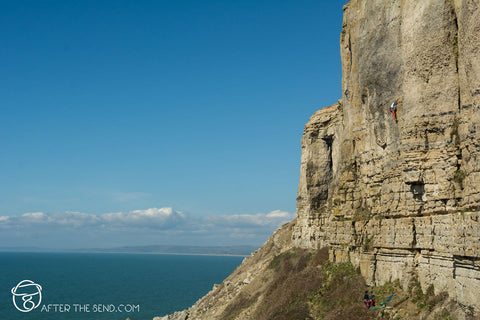
Image: Blacknor Central, Portland by After the Send
GRADE 4
GRADE 4+
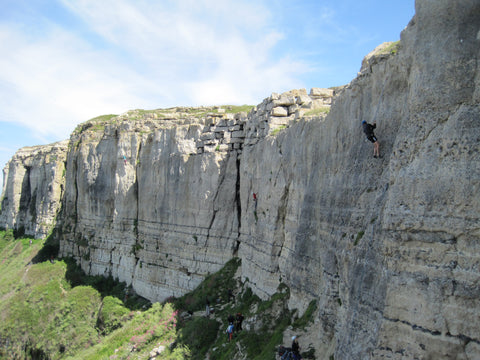
Image: Blacknor South, Portland
GRADE 5
GRADE 5+
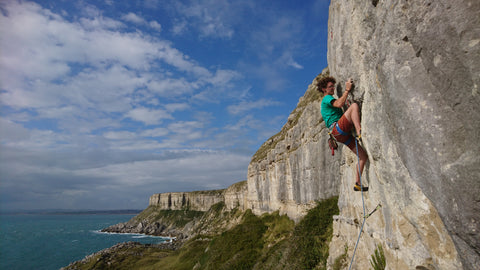
Image: Battleship, Portland
GRADE 6a
GRADE 6a+
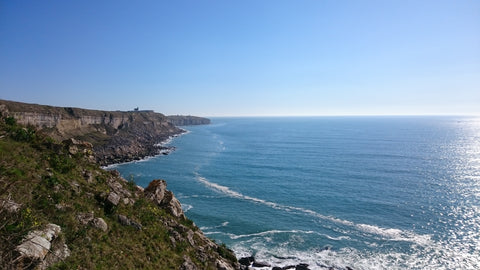
Image: The west coast of Portland
GRADE 6b
GRADE 6b+
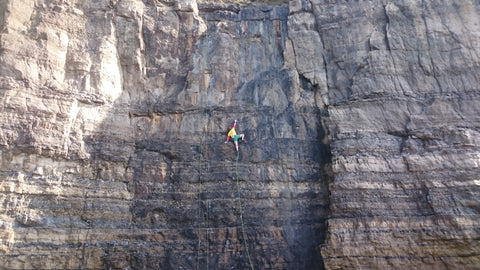
Image: Coastguard South, Portland
GRADE 6c
GRADE 6c+
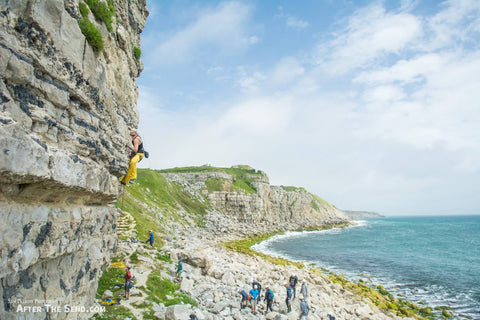
Image: Cheynes Weares, Portland by After the Send
GRADE 7a
GRADE 7a+
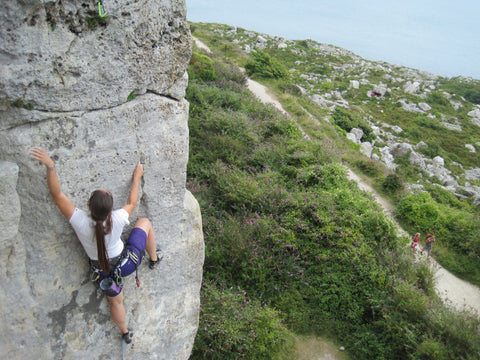
Image: The Cuttings, Portland.
GRADE 7b
GRADE 7b+
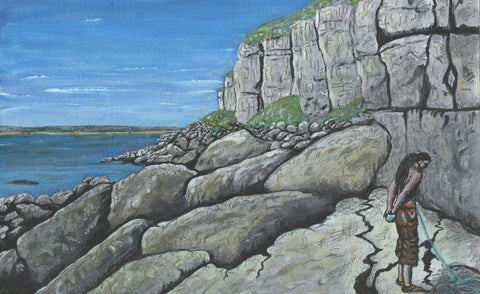
Image: Painting of Wallsend, Portland by Robin Rendall
GRADE 7c
GRADE 7c+
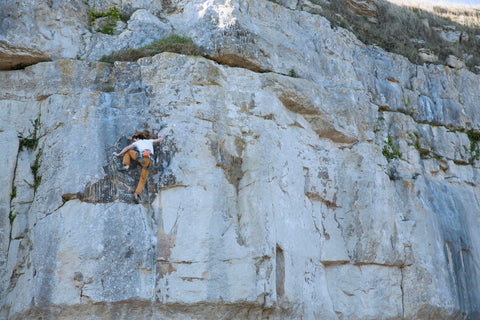
Image: The Cuttings, Portland by Paul Houghoughi
GRADE 8a
Portland is a stunning climbing area, just take care to research some of the approach paths as the landslide that occured in 2014 post-dates the 2012 Dorset Rockfax guidebook and some paths detailed in the book no longer exist (Blacknor Far South and the north of Battleship). Enjoy climbing in this beautiful place, there are literally thousands of amazing lines to access for all abilities. Happy Climbing!
Main image of Coastguard North, Portland by After the Send.

Today’s guest blog is written by Louis Bosence, a Dorset sport climber who is most at home on the stunning limestone cliffs of Portland and Swanage. After many, many years ticking sport routes and reaching a peak in his climbing ability, Louis had a horrific accident at work in 2013 that severed tendons and nerves in his right hand and was told after surgery that he’d never climb again. As an 8a climber, Louis couldn’t have heard worse words coming from the Doctor’s mouth…
“I started climbing at the age of 17, in my last year of school. I was lucky enough that my school had a climbing wall. It wasn’t anything spectacular; just four top-rope lines of vertical textured ply at one end of the sports hall, but that was enough to get me hooked and it wasn’t long before I was pushing myself on hard sport and DWS routes outdoors on the local limestone.


My accident happened back in 2013. I was working as a gardener, which is still my job now. Without going into too much gory detail; a momentary lapse of concentration while hedge-cutting resulted in severed flexor tendons and major nerves in my middle and ring-finger on my right hand, as well as a deep gouge to the tip of my index finger. There was a lot of blood and my customer, who coincidentally is a doctor, very kindly drove me straight to A&E!


The specialist plastic surgeons at Salisbury hospital had no trouble in re-attaching the tendons (this involved pulling them up from inside my wrist where they had retracted to!) and stitching my hand back together. Following the surgery, I was seen by a Surgical Registrar who told me point blank that I’d never climb again. I was devastated. I couldn’t comprehend a life without climbing. My hand was a mess of stitches and dressing and I was in a moulded cast so that the tendons in my fingers didn’t stretch. I really struggled to deal with it mentally.
This is where a glimmer of hope emerged. Two weeks after surgery I was referred to the Hand Therapy Unit at the hospital. They had me moving my fingers straight away, although painfully at first. Your tendons run inside a tunnel like structure and if the tendons don’t glide through the tunnel then very quickly tissue starts to form between the two which fixes the tendon so you can’t move it. I had to be careful though – my forearm muscles were of course not damaged; they were as strong as ever, and pulling too hard would tear the stitches in my tendon.
As soon as the Physiotherapists in the Hand Therapy Unit discovered I was a climber they knew that they had their work cut out. They told me that rock climbing was by far the most strenuous thing you can do with your fingers, but they were confident that if I followed their routine of exercises, stretches and muscle tissue massage there was no doubt that I could climb again. This started with gentle finger curls and extensions, on the hour, every hour.

I followed the Physio’s plan to the letter and rehab took about 3 months before I could confidently use my hand again in everyday life. From then I tentatively reintroduced climbing. I was so careful, climbing only on the biggest jugs indoors for probably two months, before I dared load my tendons on anything like an edge. It was slow progress but gradually I began to build strength back in my forearm (which had total muscle wastage through disuse) and the damaged tendons themselves. A year on from the injury, I was climbing outside again. I had a lot of scar tissue which was uncomfortable and took a while to toughen up and the damaged nerves were still not right. Nerves take the longest to recover. They literally have to re-grow and branch thousands of times to form receptors under your skin which give you feeling. At this stage, all I had was a fuzzy sensation in the tips of my middle and ring- fingers and very little feeling at all on the tip of my index, so it was a little tricky to know what I was holding onto some of the time! Even now, 6 years on, the feeling in those two fingers is still a bit peculiar.
I was so happy that I was able to return to climbing. By working with the Hand Therapists, I regained virtually full mobility and strength and have climbed harder post-injury than before (just to prove that Registrar wrong!). Apart from the scar reminder, I have tendonitis in my ring-finger. I don’t know why exactly but it seems to flare up in that one finger. Perhaps because of the residual scar tissue in the first joint, which stops me from fully straightening that finger, it gets loaded more than the others. Oh, and sometimes, because I can’t straighten it fully, it does get stuck in little finger cracks occasionally!

I think if you’re motivated, there’s little that will stand in the way of a person achieving full rehabilitation. That might not mean things are exactly as they were pre-injury, but you soon learn to adapt. We are so lucky that we have such brilliant understanding of physiology, and with the assistance of healthcare professionals your body can recover from some pretty drastic injuries. I was lucky that I only cut my fingers, but I’m fairly sure whatever injury I might endure I’ll always find a way to climb. Just look at the incredible feats of Para-climbers these days!” By Louis Bosence.
Louis was understandably devastated at the time of the injury but like most climbers who tend to have a built-in stubborn streak and ability to get right back up once knocked down, he proved that Doctor wrong. Louis climbed 8a pre-injury and has climbed 8a post-injury (see banner image – Breathing Method 8a)! It just goes to show what following a strict rehab programme, being sensible and keeping the faith can do in the face of adversity. Thank you so much to Louis for his guest blog.
Photo credits: Louis Bosence, Lenka Marcinatova, Paul Houghoughi (banner image).

Almost two years after the launch of the Pongoose brand and the innovative Pongoose Climber 700 clipstick, we were finally in a position to launch the new longer length, multidirectional and 3in1 clipstick. The opportunity to offer two lengths of clipstick was just too good to miss so we focused all our energy into working doggedly hard to get this in place as a priority. For those interested in the process, this is the story of how the Pongoose Climber 1000+ came to life.
The Why
After the overwhelming, international success of the Pongoose Climber 700, the demand for a longer length option was something that couldn’t be ignored. Customers from all around the world were emailing us asking us when we would be getting a longer length and we were overwhelmed by the support we were receiving from the global climbing community as a brand still in its infancy.
Whilst the original length stick is perfect for travelling with and will reach most first, second, and even some third bolts, depending where you are, there’s no doubt that sometimes those bolts are placed just a little too high or you simply want to clip more bolts from the ground. The longer length just had to happen to enable us to grow as a brand.

The How
Testing of different length and style telescopic poles began in early 2018. We tested various different lengths and options, finally narrowing it down to two; the 1200mm and 1000mm sizes (collapsed pole length). After final testing of both, although we know some climbers like to have the most reach possible, even to clip the chains at the top of a route, the 1200mm length was simply too bendy and the additional reach was not worth the sacrifice in stability and control. The final Pongoose Climber 1000+ combines the perfect balance of reach and controllability with very little bend, especially if the dangling rope is held securely against the pole.
Along the way, we involved Pro-climber and friend, Robbie Phillips, who loves a good Pongoose. He offered to help test the longer stick whilst bolting a new big wall route in Madagascar and really put the new length through its paces. It was a success and the stick even played the part of extra in the climbing film, Blood Moon. Photo credit: right image by Robbie Phillips.


The ‘+’
With extra length came the need for an even stronger, more durable telescopic pole due to the forces exerted on the connecting sections. In order to avoid sacrificing stability for length, the individual pole sections have been made slightly wider in diameter than the original Pongoose Climber 700 size pole. With this change also came upgraded twist-lock mechanisms to cope with the additional length and weight when extended. Hence, the ‘+’ was born.

The Interchangeability
This is the most exciting bit of the project and Pongoose Climber collection. Mr Pongoose is one for thinking ahead so the Pongoose Climber was originally designed with the idea to swap head complexes between different size poles. This means customers only have to buy one complete clipstick and a separate telescopic pole, rather than two complete clipsticks.
The identical camera thread on the top of the poles means the entire head complex can be unscrewed and swapped to a different length pole, so climbers have the choice of which length they need for their choice of crag or climbing destination. All the interchangeable functions to transform the clipstick into a brushing stick or an action camera boom are still applicable.
See products page for individual clipstick and telescopic pole prices and full details.

The Support
Pongoose were very lucky to have collaborated with the Arts University Bournemouth (AUB) which enabled the expansion of the business and the fruition of the Pongoose Climber 1000+ project. Massive thanks to them and the European Regional Development Funding for research and innovation that has made it possible for us to grow our business.


Main cover image credit: with thanks to Sam and Emmie, After the Send.

Here at Pongoose we are super psyched to have linked up with Craig DeMartino, the star of ‘Craig’s Reaction’. If you haven’t heard of it or seen it on the recent Banff Film Festival tour, ‘Craig’s Reaction’ is a film made by Bearcam Media of American climber, Craig, who was victim of a serious climbing accident in 2002 that completely changed his body and his life. We are always inspired by stories of inspirational people who overcome huge adversity and Craig is one of those people so we are humbled to be working with him.
On a routine day out climbing in Colorado 17 years ago, Craig was accidentally dropped 100 feet and ended up with multiple injuries and fractures, and ultimately an amputation of his most injured leg below the knee. Craig was lucky to escape without a serious spinal cord injury and a future in a wheelchair, not to mention his life. He endured a three month stay in hospital and with the follow-up support of a rehab facility and his amazing wife and children, Craig slowly rebuilt his life, and eventually his return to climbing with a prosthetic leg.


Craig spent many years following the accident rebuilding his life. The point he is at now is testament to his positive attitude and drive to not let his disability define him. He lives by the mantra:
“Life is 10% circumstances and 90% my reaction”

Craig’s injuries and experience may have destroyed many of us but thanks to his positive way of viewing things, and no doubt a hell of a lot of work and effort behind the scenes, he has used his experience to help others and has done some really cool stuff since. We don’t want to spoil the film for you, and we really do urge you to watch it as it’s so inspiring, but here’s a few of the records Craig has chalked up since he returned to climbing with a prosthetic leg:
In addition to these awesome achievements, Craig runs climbing clinics to teach other less-able-bodied people how to climb, inside and outside. We’re really excited to be able to support Craig with Pongoose clipsticks (or stick clips if you’re in the US!) to help his clinics and give confidence to climbers leading outside. Craig also uses his experience to speak at various events on challenging topics such as overcoming adversity, post-traumatic growth and embracing a new normal. You never know, with us climbers choosing a potentially deadly pastime, we could be needing one of his talks or clinics one day!


Here's what Craig says about his Pongoose Climber clipstick:
“For me, sport climbing is a great way to push my limits, but I don’t want to hit the ground blowing the first or second clip. The Pongoose allows me to just focus on the climbing, the movement, and the fun that has drawn me back to climbing for all of my life. The durability and design allow for tall, difficult first clips, to happen with ease, and the size in my pack when collapsed make it easy to get to and from the cliff.”
Thanks Craig! :)
You can find ‘Craig’s Reaction’ on the Banff Film Festival website and other paid video platforms such as You Tube, Vimeo and Google Play, depending where you are based. Check out Craig’s website at www.craigdemartino.com and follow him on Instagram @craigdem
Photo credits: with thanks to Craig DeMartino.

Since we launched our brand and flagship clipstick product in August 2017 we’ve seen all sorts of interesting comments online about the use of clipsticks. The usual comments about it being cheating or calling it a ‘cheat stick’, we were expecting and find that rather amusing. What isn’t amusing is that these comments can be taken too far on the crags and really upset people using a clipstick.
Clipsticks have been around for well over 15 years now in a few different shapes and forms and the view on their use within the climbing community has changed dramatically over that time, with them now being a standard part of most people’s kit. Climbing as an activity has also changed beyond recognition in that time and so has its accessibility to the masses, including those with sometimes severe disabilities. More and more people from all walks of life are spending their time hauling themselves up multi-coloured indoor climbing walls and feeling the pull of the outdoor crags with their beckoning mix of wonder and scariness. These days most people begin climbing indoors and making that leap from nice safe, comfortable plastic to sometimes intimidating, towering outdoor crags and cliffs can be made a lot easier by equipment such as clipsticks.

Photo: Lisa feeling on top of the world at Portland by Dan Verge
So why are people receiving abuse for using them on the crags? This is something that baffles me personally. As far as I see it, use a clipstick, don’t use a clipstick. Whatever, its personal choice. What does it matter to anyone else if they see someone using one on the crag? Let’s face it, clipsticks can protect you from broken ankles or skulls by clipping the first bolt or two on hard routes, or on those with chossy rock. They can also mean you can safely reach the anchor if you’ve exhausted yourself on a route and want to get back your £100 worth of quickdraws hanging teasingly above you for someone else to loot when you’ve limped off home. You can also try routes that are just beyond your reach, not to mention doing that in a reasonable time period rather than hogging a route all day when other climbers are queuing up.

Photo - Working the Burning Skies crux by After the Send
Yesterday, I saw a comment on social media that said “to use a clipstick makes you fake and weak”. Interesting viewpoint. As far as I see it, clipsticks can help you achieve goals, push your grade and avoid injury. Nothing fake or weak there.
We have met a lot of people who have told us stories of how random people have come up to them, uninvited, at crags and verbally abused them for using a clipstick, one person even reduced to tears by the venom that came in their direction completely unnecessarily. In each example, the person with the unwanted opinion has often, sadly, been a ‘good’ climber who can probably climb everything in flipflops with their eyes closed. The very people that should be encouraging others, not squashing them for an ego boost.
Friend of Pongoose, Kayleigh Lincoln, recently had an upsetting experience in Kalymnos whilst climbing with her husband, Si, and posted this on her Instagram feed…

Photo - Projecting her 7a in Kalymnos by Kayleigh Lincoln
Wow. Who on earth onsights every route they climb?! I’m sure that delightful man doesn’t! To experience that ‘advice’ would likely leave most of us with a nasty taste in our mouths and a big dent in our confidence. For someone to say you shouldn’t be climbing if you need a clipstick is simply ridiculous. Would they say that to Steve McClure who’s been using his own homemade clipstick for many, many years? The man who has ticked the hardest sport route in the UK to date? Or would they say that to the clipstick-wielding paraclimbers who put us ‘able bodied’ climbers to shame by climbing harder than a lot of us with a missing limb?

Photo - An upgrade to a Pongoose clipstick by Steve McClure
As a person who started climbing at 36 years old, I was over the moon when my soon-to-be husband showed me his then secret clipstick design, the Pongoose Climber, and I grabbed on to it as tight as my chalky paws could hold it! My leading fear was a real issue (and still is to be honest) and with the stick I could actually build my leading confidence safely and start moving up through the grades. Let’s face it, who likes feeling thoroughly terrified or like you have to sit on the side-lines just because you don’t have 20 years plus of climbing experience or can’t onsight every route you try? I certainly don’t.
Furthermore, most of us go climbing for some peace and quiet from our stressful lives. We might have experienced a death in the family, be struggling with a physical or mental health issue, or simply be at the end of our tether for one of a hundred reasons. To have someone abuse you for using a clipstick could put you off climbing for life, or worse, push you over the edge mentally if you’re already in a bad headspace. Of course, I’m biased towards the use of clipsticks but my main beef with this issue is the unkind, egotistical approach by people who feel they have to step all over climbers who are just trying to mind their own business.
Why not live and let live?

Photo - Happy clipsticking climbers
Written by Rob Rendall.
Main image photo credit to - After the Send

DISCLAIMER – This blog is intended only to increase awareness of preparing to climb outdoors and in no way does the author take responsibility for the actions of other climbers or any events that may occur whilst sport or trad climbing, or bouldering. The author is not a qualified climbing instructor and all climbers should ensure they have the skills, training and equipment necessary for climbing before embarking on the activity. All climbers enter into the activity of climbing at their own risk and should always be aware of the possibility of serious injury or death as per the BMC participation statement that can be found on their website.
Climbing indoors is easy right? You don’t really need to think about much, just rock up to your wall of choice and off you go. Well, outdoors is a whole different ball game. It can be very easy to underestimate the preparation and thought required for the transition from indoor climbing to outdoors, so I’ve put together a few points to consider. It is important to be aware that I am just a climber and not a qualified instructor in any way, so it is crucial that you do your own research and are responsible for your own actions and safety. This article contains only pointers of things to consider for the transition from indoors to outdoors and the list is not exhaustive. I highly recommend paying an outdoor instructor to take you the first time you go outside for your ultimate safety.
Are you and your climbing partner(s) competent?
Before embarking on the outdoors, have you first mastered the techniques you need to climb safely indoors? It’s worth thinking of indoor and outdoor climbing as totally different but there are obvious basics that you need in order to be confident and safe outside. If you’re planning to go bouldering outdoors, do you realise the importance of spotting the person climbing and how to do that properly? There may be a need for a larger number of pads to protect falls, especially in awkward areas where there are lots of rocks or boulders that could cause injury if fallen on wrong. If climbing with ropes, do you know all your required basic knots, can you belay safely and can the climber lead competently? It’s entirely worthwhile undertaking training with a qualified climbing instructor to ensure safety. There are plenty that cover indoor climbing and also the transition to outdoor, especially for sport climbing. Climbing on rock is very different to climbing on plastic. Of course, outdoors there are, more often than not, no fixed carabiners at the top of routes so it’s extremely important to consider skills such as tying off at the lower-off bolts or chain, including the correct ethics involved with these types of lower offs, i.e. never top rope through the bolts, always use quickdraws until it’s time to strip the route.

Equipment
Outdoor climbing requires you to be super organised with your equipment and to ensure it is all in working, safe condition. You won’t want to be running that fluffy rope over sharp limestone aretes (corners) or ledges… If sport climbing, you’ll need to consider adequate harnesses, ropes, carabiners, enough quickdraws for the length of the routes at the crag, belay device, slings for tying off, and additional extras that make your life easier, such as a Pongoose clipstick, rope bag, square of carpet to wipe feet on etc. Last but not least on this, a helmet for both the climber and belayer. Never assume that an outdoor route is solid as a rock… most crags are sea-facing cliffs or quarried faces so the risk of holds breaking off or rockfall is very high. Sea facing crags are often hammered by high winds and harsh weather conditions, and quarried faces are normally fractured rock from the destructive forces of quarrying. If your partner is climbing and dislodges a chunk of rock that knocks you out, will they know how to get down from the route? All of this is worth considering, these things do happen.

Crag access & restrictions
Some crags are easy to access and, once you’ve found the car park and way in, it’s an easy walk to the rock. Others, not so much. Guidebooks will give you a good idea of where to park, ideally including any places to avoid so not to upset locals etc, and also QR codes and GPS co-ordinates so you can find them with your phone. All good so far, but what about getting down to the crags? If you’re considering climbing on sea cliffs, for example Portland’s west coast, it’s worth being aware that the paths can be tricky to negotiate and dangerous at some points. Some paths have also been wiped out by landslides and the resulting changes are not always in the guide books (eg landslide of 2014 occurred after last Dorset guidebook of 2012). Checking with instructors, local climbers, climbing pages on social media and BMC/UKC websites for recent updates on access is always a good idea, rather than just rocking up and getting into trouble on a dodgy access. On this note, always consider the correct footwear as the mud paths can be slippery so good grips on shoes are essential.

Something you might not be aware of is restrictions to crags. Some crags are on private land so you might be trespassing. Some have access restrictions or a complete ban during certain times of the year for nesting birds. It is very important to adhere to these, not just for the wildlife, but to ensure that the crags remain open. If the guidebook says to abseil in rather than walking along the base of the cliffs, you will need to weigh up skills and ability to ensure that you can safely access where you want to go, and to get out again of course! Again, the guidebooks and BMC/UKC websites can give you information on these restrictions.

Landslides and rockfall
Have you ever thought about what you would do if the ground you were belaying on suddenly dropped from beneath you? Or if you were climbing a route and Smart-car-sized blocks of rock started to fall from above you with no warning? Do you even consider that this could happen? In a world where most of us climb at indoor gyms where everything is solid and safe, it’s easy to transfer that complete trust to the rock when we go outside. The majority of crags are solid under-foot but, again, using Portland as an example, there are many sea cliffs that are unstable underfoot as well as above. Having your wits about you is so important. Considering the safest place to stand or sit between climbs, where to belay or even where to eat your lunch, is so important. Landslides and rockfalls can occur without warning at any time. My blog ‘Outdoor Climbing – Risky Business?’ has more detail about this.
Crag and rock ethics
Picture the scene; you’re walking into the crag, excited and looking up at the amazing cliffs that equal the most wondrous routes you’ve ever seen… and you step in poo. Dog poo, human poo, either way it’s gross. Crag ethics are so important to ensuring a pleasant day out for all and also to ensure that they don’t get shut down by whoever owns the land if the areas get trashed. Always visit the loos before you head to a crag for the day. If you do have to go when you’re out, try and go into a bag that you can tie up and take home with you. Worst case scenario and you have no bag, dig a hole and bury the waste away from the crag or public walkways. Think carefully about leaving no trace. This applies to food and drink rubbish, and in particular, baby wipes.
Leaving no trace also applies to excessive use of chalk and leaving routes covered in tick marks. Make sure you’ve got your Pongoose brush so you can clean the rock after you’ve finished the route or boulder problem. It’s worth being mindful here too of rock erosion that can occur with over brushing or brushing too enthusiastically. Barely any force is required to effectively clean off chalk.

A final point on this topic is being aware of others on the crag and noise levels, especially if you are taking children or dogs who can tend to become very excited. If the chap climbing on the cliff is trying a precarious onsight or his last desperate attempt at a redpoint, he won’t appreciate lots of shouting, noise or even music. If there is excessive noise, how can they hear their belayer, or their belayer hear them if they’re shouting down to watch out for some rock they’ve dislodged? If the belayer mishears ‘slack’ for ‘take’ they may pull the climber off the wall. Let’s face it, climbing is meant to be a fun activity but it can be very disturbing if you’re terrified trying to lead a route and there are distractions all around. Music is generally frowned upon at outdoor crags because it can be extremely distracting and detract from the immersive outdoor experience. The same goes for smoking. If you have to smoke make sure you are down wind of people and always take your cigarette butts away with you.

Outdoor bolts
The final topic I will talk about is outdoor bolts. Many people assume there is a Bolt Fairy, but they simply don’t exist! The bolts don’t magically get put into the rock, or maintained by a fairy, they are put there by other climbers like us out of their love for climbing. Many areas have dedicated bolt funds that bolt new routes and maintain existing routes by replacing unsafe or old bolts, but these are run by volunteers and the money for equipment is often gained by fundraising. You may see a collection tin at your local wall or climbing shop near the reception desk. Did you know an average sport route costs £100 for the bolts and lower-off chains? I didn’t when I first started climbing. Bolt Funds often have a dedicated PayPal account or way to donate online or via your phone. If you pay £10 per indoor climbing session, you could consider donating the same to a bolt fund to contribute towards bolt maintenance if you climb outside. There are only a couple of crags owned by the BMC in the UK (Peak District area) who bolt and maintain them, but this is rare, generally it’s down to all of us as climbers to keep them up to a good, safe standard.

When people first go outside, they often don’t understand the importance of keeping the bolts as good as they can be for as long as they can. For example, as I mentioned earlier, it’s not the done-thing to put up a rope, tie it through the lower-off bolts, and then allow people to top rope directly through the bolts, although you may see this with groups quite a lot. The reason for this is that the rope and small particles of dirt on the rope erode the bolts over time and then they need replacing more often, or they may fail completely if worn through. Bolt failures do occur so it is worth being vigilant at all times and consider lowering off from the two bolts or chain at the top of a route rather than relying on one bolt part way up. Be aware of the state of the bolts on the route you’re about the climb and if in you are in any doubt about them, simply walk away from the route and climb a different one, preventing others climbing it if it is clearly dangerous. You should then report it to the local Bolt Fund so they can remedy the problem as soon as possible to avoid danger for others. There is more information on this topic in my ‘Does the Bolt Fairy Exist?’ blog.

Finally, this article is not designed to put the fear of God into you about climbing outdoors, but the more prepared you can be, the better. Climbing is a dangerous sport but you can make it safer by being prepared, educated and on the ball. The rewards of climbing outside in the fresh air are so satisfying and it really is amazing, but never take safety for granted. So, take care and happy climbing!
Useful links:
The BMC Regional Access Database www.thebmc.co.uk/modules/RAD
UKClimbing crag guides and logbook www.ukclimbing.com/logbook/map/
By Rob Rendall.
Main Photo, brush, lower off and bolt fund drillers images credit: Sam Parsons from After the Send.

DISCLAIMER – This blog is intended only to increase awareness of the importance of buddy checks and in no way does the author take responsibility for the actions of other climbers or any events that may occur whilst sport or trad climbing. The author is not a qualified climbing instructor and all climbers should ensure they have the skills, training and equipment necessary for climbing before embarking on the activity. All climbers enter into the activity of climbing at their own risk and should always be aware of the possibility of serious injury or death as per the BMC participation statement that can be found on their website.
Picture the scene: it’s a beautiful day at the crag, you’re there with your mates, chatting and laughing, you’re keen to get climbing so you rush through tying your knot and jump on the rock ready to crush… but have you done your buddy checks? Have you tied your knot correctly with a back-up stopper knot? Is your belayer ready with their device and equipment set up correctly? Is everything OK with your rope and have you got enough quickdraws for the route? Do you have the correct gear for tying off at the top of the route?
This blog is intended as a reminder to carry out your buddy checks before you start climbing, and applies to indoors and outdoors where a knot and rope is involved. We could all do with the reminder to do buddy checks, despite how experienced we are. It’s easy to get blasé isn’t it? We’ve all been there, I’m sure. I know I have!
Rob and I have always made a habit to do buddy checks but one day last year, for some reason unbeknown to me, or him, I forgot to put the rope through the belay device before he started climbing. I was distracted, chatting to other people on the crag, as was Rob at the same time as clambering up the steep bank to start a nails route. On this occasion, neither of us checked his knot or my belay device. After he’d climbed two metres and was ready to clip, I went to pay out rope and realised with absolute cold horror that I was simply holding the rope in both hands and it wasn’t through my belay device at all. Needless to say, I’ve never snapped a rope into my GriGri so fast in my life. We were lucky that time but I got the biggest shock of my life at that moment. Obviously, I’m a complete idiot for making this ridiculous mistake, but that’s why it’s so important to look out for each other as a pair; if one misses something, then hopefully the other will pick it up before something bad happens.

Photo: If in doubt, train your climbing sausage to remind you to do your buddy checks by barking (Dog model: Tilly)
Sadly, others have not been so lucky. For example, the death of an experienced climber last year at an indoor wall and a recent accident at Portland only days ago (photo below of Coastguard helicopter rescue), with both climbers falling from the top of their routes to the ground. The facts of these events are known solely by the people involved and it is not my place to speculate on the details, however it is important to be aware that these accidents can happen, if only to prevent future incidents.

Photo credit: Portland Bill Coastguard Rescue Team
Going forward, what can you do? Remember your buddy checks for a start. The list is probably exhaustive but here are a few basics to remember:
Written by Rob Rendall.

DISCLAIMER – This blog is intended only to increase awareness of the dangers of outdoor climbing and in no way does the author take responsibility for the actions of other climbers or any events that may occur whilst climbing outside. All climbers enter into the activity of outdoor climbing at their own risk and should always be aware of the possibility of serious injury or death.
As outdoor climbers, we accept that there is a degree of risk associated with climbing on rock, whether it be a quarried, blocky face, or a weather-battered sea cliff full of cracks, but are we really prepared for the occurrence of random rock fall or landslides? Have you ever thought about what you would do if the ground you were belaying on suddenly dropped from beneath you? Or if you were climbing a route and Smart-car-sized blocks of rock started to fall from above you with no warning? Do you even consider that this could happen? In a world where most of us climb at indoor gyms where everything is solid and safe, it’s easy to transfer that complete trust to the rock when we go outside.
I started climbing at a much older age than the majority of people (36 years old in fact), and I often wonder if this means I have come at it with a slightly different approach and awareness of risk than I may have done if I’d started climbing decades earlier. Perhaps some of us older climbers may have an unnecessarily reserved attitude to risk, but rockfalls do happen, landslides do occur and holds do break off. It’s not a matter of scaring people here, it’s a matter of being aware of the risks of climbing in Mother Nature and not being too blasé when you’re out and about on the crags.
INDOOR TO OUTDOOR TRANSITION:
A huge number of indoor climbers make the transition to outdoor with a complete lack of understanding of the risks associated with outdoor sport or trad climbing. Sometimes, people genuinely just don’t know or give it a thought, it’s simply a matter of being blissfully unaware of the risks thanks to a long time climbing on solid wood constructions indoors with plastic holds that don’t snap off. Other times it may be ignorance, or even ego, that causes people to think they’re invincible and that the cliffs we climb on really are as solid as a rock. If you're thinking of going outside for the first time, or even if you go regularly, it's good to have a re-cap and a bit of think about the possible dangers you might face.
LANDSLIDES:
The photo below shows the colossal landslide that occurred at Portland in Dorset in February 2014. The massive amounts of rock, mud and large boulders that slid from the top and base of the cliff, thanks to months of rain and cold weather, was jaw dropping. It took out complete crags along the west coast of Portland in the middle of the night, luckily a time when nobody was walking or climbing in the area. This landslide happened just when I started climbing and it opened my eyes to at least one of the risks associated with climbing on sea cliffs along that coast. I had no idea that the ground leading up from the boulder beach to the path at the base of the crags is essentially a honeycomb of boulders, mud and vegetation, looking solid from above but full of air pockets from below. I realise this is not the case for a lot of climbing areas but with the popularity of sport climbing in the South of England increasing, more and more people are visiting these crags, hence the example. I wonder how many people fully check out their surroundings or the stability of the ground they are standing on, whether it’s the south coast or anywhere else in the UK, or abroad?

ROCKFALLS:
As an example, in the Portland and Swanage areas where we climb rockfalls happen reasonably often. Areas in Portland, particularly Cheyne Weares and Blacknor Central, are prone to some serious choss and rockfalls. Reports of fridge sized blocks falling from the cliffs are frequently described on the UKClimbing logbooks or on social media. Just two weeks ago, blocks fell from the cliff at Blacknor Central with no warning, rolling down the honeycomb mud and boulder slope and narrowly missing some climbers at the Diamond Slab area below on the boulder beach. Luckily, no one was hurt, just a few shaken climbers that day. This particular area is known by the locals as being loose and dodgy, but how many climbers visit the area that don’t read the UKC logs or even own a Dorset climbing guide book where there are warnings about the approaches and chossy climbs (albeit that guide is now six years old and doesn’t cover the recent changes to the land or the cliffs)? The photo below is of the area the recent rockfall took place, looking reasonably solid from a distance but the bands of rock become increasingly loose as you move along the coast northwards.
So, what can you do to stay safe? We should all remember that there will always be risk and the land will do what the land will do, but there are a few things you can do to help yourselves:
Photo credits - Thanks to Sam at After the Send for the fantastic photos.
Author - Rob Rendall.

Pongoose is a brand that particularly celebrates the ‘normal’ climber. With that we do not mean that we ignore the pro-climber’s achievements, far from it, but as ‘normal’ climbers ourselves we recognise the challenges of juggling climbing with a full-time day job and the lack of time to train or climb due to other family or child-care commitments. It can be particularly challenging as a climber to overcome an injury or climb alongside a health condition that poses its own set of everyday problems. This guest blog is by Kayleigh Lincoln. She is a 31 year old from the south of England who started climbing less than three years ago, but despite battling an auto-immune condition called Crohn’s Disease, she has clearly shown that you can still crush like anyone else without a medical condition. In fact, she can crush better than a lot of us! If you're looking to be inspired, read on...


DISCLAIMER
This blog has not been written by a qualified climbing instructor and is only intended for use as a reminder of good practice. All climbers should take responsibility for their own competence and consider obtaining training by a qualified instructor prior to climbing outside. This includes how to lead climb, tying-off, striping routes and the equipment you should carry for safety. Anything written in this blog should not replace any advice given by a qualified instructor or that provided by experienced bolt fund representatives.
The vast majority of people that climb or boulder, do so indoors. There’s plastic holds and in-situ quickdraws and permanent carabiners at the top of every route. Perfect hey! But… what happens when you go outside to try sport climbing? Have you taken a course or gone out with a qualified instructor and learnt all about bolt etiquette? Have you ever given any thought as to how those bolts get there, if they’re safe and what happens if they need replacing? The Bolt Fairy sorts it out right? Wrong!
So, you turn up to the crag, you climb up your chosen route, clipping your draws all the way to the top and have a wonderful day climbing in the sun (hopefully!). Did you ever give any thought to the bolts? It’s easy to take them for granted, almost think they’ve always been there. What about the sort of condition they are in? Did you think to look closely to see if the glue or rock has eroded around them? Did you consider the integrity of the bolts at the lower off? How well-travelled the route has been? Let’s face it, how many of us do if we rarely get outside or purely haven’t given it any thought?

WHO BOLTS THE ROUTES?
Thousands of sport routes were bolted decades ago, especially where we climb in Dorset at Portland and Swanage, but this can be applied to many climbing areas. Routes were bolted by local or keen climbers, often entire crags by one person, or in the case of Kalymnos, almost the entire island by one person! These people often had no special skills for bolting but yet their love of climbing drove them to develop the areas we are lucky enough to have today. But what happens to all these tens of thousands of bolts over the years after continuous rope wear and the impact of falling climbers?

THE BOLT FAIRY
Now you’re hopefully picturing all these zillions of bolts and viewing outdoor routes in a different light. Maybe even considering who replaces old bolts and monitors the crags? The BMC maybe? Sadly not. The BMC do own and maintain a few crags in the UK, for example; Horseshoe Quarry in the Peak District. In most other cases the land is privately owned but these land owners do not get involved with the bolting at all. So, there really must be a Bolt Fairy?! Still wrong! You may laugh but it’s amazing how many people don’t give it a single thought and continue to climb in a degree of ignorance, innocently or not.

A lot of crags don’t get maintained at all. Some are looked after and routes bolted by keen climbers or those handy with a drill. Other areas are lucky enough to have designated Bolt Funds. There are many bolt funds that exist; the Dorset Bolt Fund, The Peak Bolt Fund to name a couple in the UK, and many others across the world that may not be quite so publicly known. I’ll use our local one, the Dorset Bolt Fund (DBF), as an example purely as we know them and have been closely involved with them over recent years. Now, it sounds grand right? Or at least like it’s a big organisation? Nope! The DBF is effectively one guy who has the occasional support of other keen local climbers. The person in question spends most of his time when he’s not at work, retro-bolting routes that are in a poor state, replacing worn bolts and generally keeping us safe. Please note that he does not get paid for this. Neither do any of the helpers he may be lucky enough to round up for a bolting day. The metal work (‘P’ bolts and chains for the lower offs) costs money, almost £100 to re-bolt one single route, and the ‘Fund’ is completely reliant on donations from climbers. I guess we could think of him as the Bolt Fairy, but I’m not sure he’d be happy about that label! He certainly doesn’t look like one! Other bolt funds are a similar set up with only one or two people running them essentially out of the goodness of their hearts… and maybe because no one else wants to.

BOLT FAILURES
Believe it or not, the DBF had three bolt failures reported in 2017, one of which was a lower off that the Pongoose Team discovered on the ground at Battleship in Portland. Now, my intention here is not to terrify you or put you off climbing outside, but to simply alert you to the fact that bolts do fail. Of course, sometimes there’s just no way you can know unless you’ve got those x-ray googles I mentioned earlier, especially when it comes to rock integrity, but there are a few things you can do.

BOLT ETIQUETTE
Don’t top rope directly through the lower off bolts
As locals to Portland, we very often see poor bolt etiquette from other climbers that are less experienced outside. The most common is top roping directly through the lower off bolts or in-situ carabiners. Often the more experienced climber will lead the route, tie-off at the top so the rope is purely through the top bolts or carabiners, meaning they don’t have to re-climb it to strip it once their less experienced partner has climbed it. For those of you saying ‘what’s wrong with that?’, this is because dust and dirt on the rope acts as an abrasive and wears away the metal over time. You might have seen half worn through lower off bolts on old, well-travelled routes, particularly lower grade ones that groups linger on during a day out climbing. The correct method is to clip two quickdraws into the lower off and top rope through these. It will require someone experienced to re-climb the route and strip it to retrieve the draws again, which can be annoying when you’re tired, but hey, that’s just the way it is. Sadly, some people do not take kindly to having this pointed out but essentially, we are all responsible for the maintenance of the bolts and I’d rather politely educate people if it means extending the life of the metal work. Remember, a single lower off chain complex alone can cost up to £35!

Lower off: chain with ring vs two staples
If a route using staples has been retro-bolted, you may see a chain at the top instead of two staples or two staples with mallions and rings. If there are any of the above with a round ring on the bottom, the ring is what you are meant to tie-off through. When you get to the lower off and someone is going to top rope it after you, clip your quickdraws into the bolts and leave the rope clipped safely into them rather than tying off through the bolts/rings. When stripping it, tie-off through the ring(s). The reason for this is that the rings spin and distribute the wear more evenly than when the rope runs through two fixed staples where the rope will always wear out the same points. If you’re on a route with Petzl style bolts, you will likely have two in-situ carabiners to clip into and these will also be subject to wear so keep an eye on these. There are also other types of lower off used but the moral of the story is to always be vigilant and reduce wear as much as possible.

Consider use of mallions wisely
Mallions are a great thing to keep handy if you need to bail on a Petzl type bolt that you can’t tie-off through for reasons of sharpness, but they can often be used inappropriately. In Kalymnos, the local climbing shops sell thousands of mallions every year that get abandoned on routes, only to rust and remain there until someone cuts them off, if that ever happens. Why not use your Pongoose clipstick as suggested before? If you always have it, you wont likely need a mallion, unless you’ve got half way up and forgotten all your quickdraws!
If you’re lowering off from the smooth ‘p’ or ‘d’ shaped staples, you do not need mallions. You can tie-off directly through the staples. Please remember the mallions will rust and cannot be removed without being cut off with an angle-grinder. These can cause problems where the staples are small and tying-off can become a nightmare when you’ve got a mallion, a quickdraw and a sling carabiner all in one bolt. I personally had a complete melt down at the top of a route at Wallsend in Portland last weekend where someone had left two mallions (rusted shut of course) in the lower off bolts, which also happened to be rather small. I top roped it and Rob had left the two quickdraws in the top but then when I got to the point of putting in my sling, I couldn’t get the quickdraws out and there would have been no room to thread the rope through either. I was hanging with all my weight on the draws and couldn’t plant my feet to de-weight them to remove any of the metal work. It was stressful to say the least!

DO YOUR PART
This is just a short blog with a few points designed to help make you aware of a few common mis-conceptions and bolt blunders that climbers make when embarking on the delights of outdoor sport climbing. There really is more to it than rocking up, paying no entry fee, and blasting your way up a handful of routes.
Why not consider supporting your local bolt fund? You can even do this when you go abroad. Guidebooks often have details about the local funds in the front of the books. You pay every time you climb inside so why not contribute to keep our wonderful outdoor crags up and running and safe? Some accept direct debit donations or you can send one off contributions. If money is tight there are other ways to help. You could offer to go on a bolting day if you see it advertised on social media. Even if you have no experience, that metal work is blooming heavy and extra hands for carrying and even belaying for the drillers is super helpful. After all, there really is no Bolt Fairy, there’s just the climbing community… and that’s all of us.

By Rob Rendall.
Photography by After the Send and Marti Hallett.


